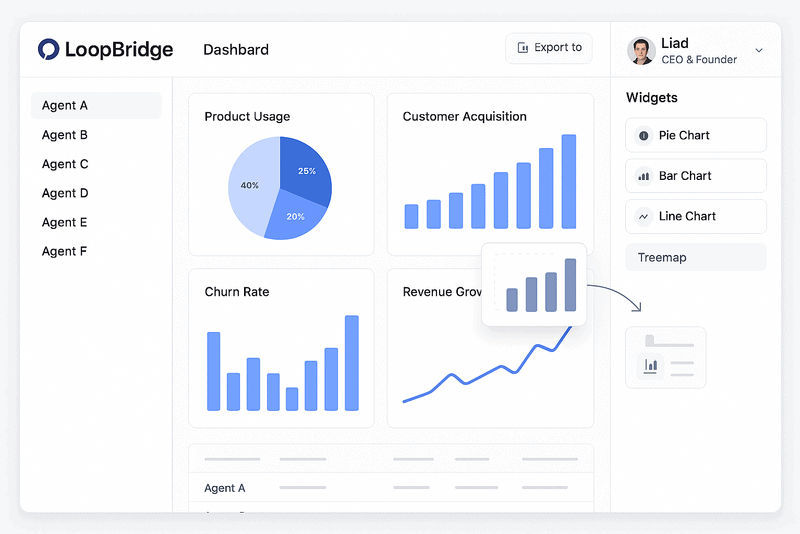
Managing AI agents is becoming one of the most valuable skills in today’s AI-powered workplace. From automating customer feedback analysis to supporting sales teams with intelligent insights, AI agents are rapidly changing how modern teams operate.
Those who master AI agent management are scaling faster, improving accuracy, and building real leverage in their business operations.
In many ways, managing AI agents is like managing people: you set clear goals, define responsibilities, offer feedback, and track performance. The difference? AI agents don’t sleep, don’t get tired—and don’t ask for promotions (yet).
🧠 Why Managing AI Agents Is a Game-Changer
The shift toward intelligent automation means AI agents are now handling research, summarization, tagging, and even strategic recommendations. But without proper guidance, they underperform—or worse, go rogue.
If you’re using platforms like Zapier, OpenAI, or LangChain, chances are you’re already working with AI agents.
Now let’s talk about how to manage them effectively.
🔑 8 Rules for Managing AI Agents Effectively
1️⃣ Managing AI Agents Starts with Strategy
Begin with the big picture. Your AI agents must understand the why behind their tasks.
Example: Direct your AI to identify top churn reasons in sales calls, not just general sentiment. Clear intent yields sharper results.
2️⃣ Define AI Agent Roles Clearly
Be specific. What should your AI agent do—and what is out of bounds?
Example: A product feedback agent should analyze customer quotes, not generate product roadmap items.
3️⃣ Onboard AI Agents Like You Would New Hires
Provide sample tasks, business context, and success criteria.
Example: When setting up an AI agent for summarizing support tickets, give it labeled examples and internal terminology like “P0” or “feature flag.”
4️⃣ Align Expectations on Output Quality
Define what “good” looks like—and what “bad” looks like too.
Example: Should a sales insight summary be 100 words or 500? Should it prioritize objections or competitor mentions?
5️⃣ Monitor Early AI Agent Performance
The first outputs are gold for debugging. Don’t ignore them.
Example: Spot if your AI is tagging every feedback as “positive” or missing niche complaints that matter.
6️⃣ Create a Feedback Loop
AI agents get better with iteration. Review results, fine-tune instructions, and retrain.
Example: Weekly feedback reviews help refine prompts or fix hallucinations in call summaries.
7️⃣ Retrain AI Agents as Your Business Evolves
Keep them aligned with your latest strategy.
Example: If your GTM team starts targeting enterprise, update your AI agent’s tone and value prop framing to reflect that.
8️⃣ Measure the Impact of AI Agents
If you’re not measuring impact, you’re not managing.
Example: Track metrics like time saved per analyst, accuracy of insights, or number of escalations avoided.
💡 Final Thoughts on Managing AI Agents
Managing AI agents isn’t just about automation—it’s about orchestrating intelligence across your workflow. With the right setup, these agents become an extension of your team.
🚀 Ready to Start Managing AI Agents?
Managing the AI agents of your business analysts starts with the right platform. LoopBridge helps you launch, guide, and optimize your agents to extract insights that matter.
👉 Book your demo and take the first step in managing AI agents like a pro.